
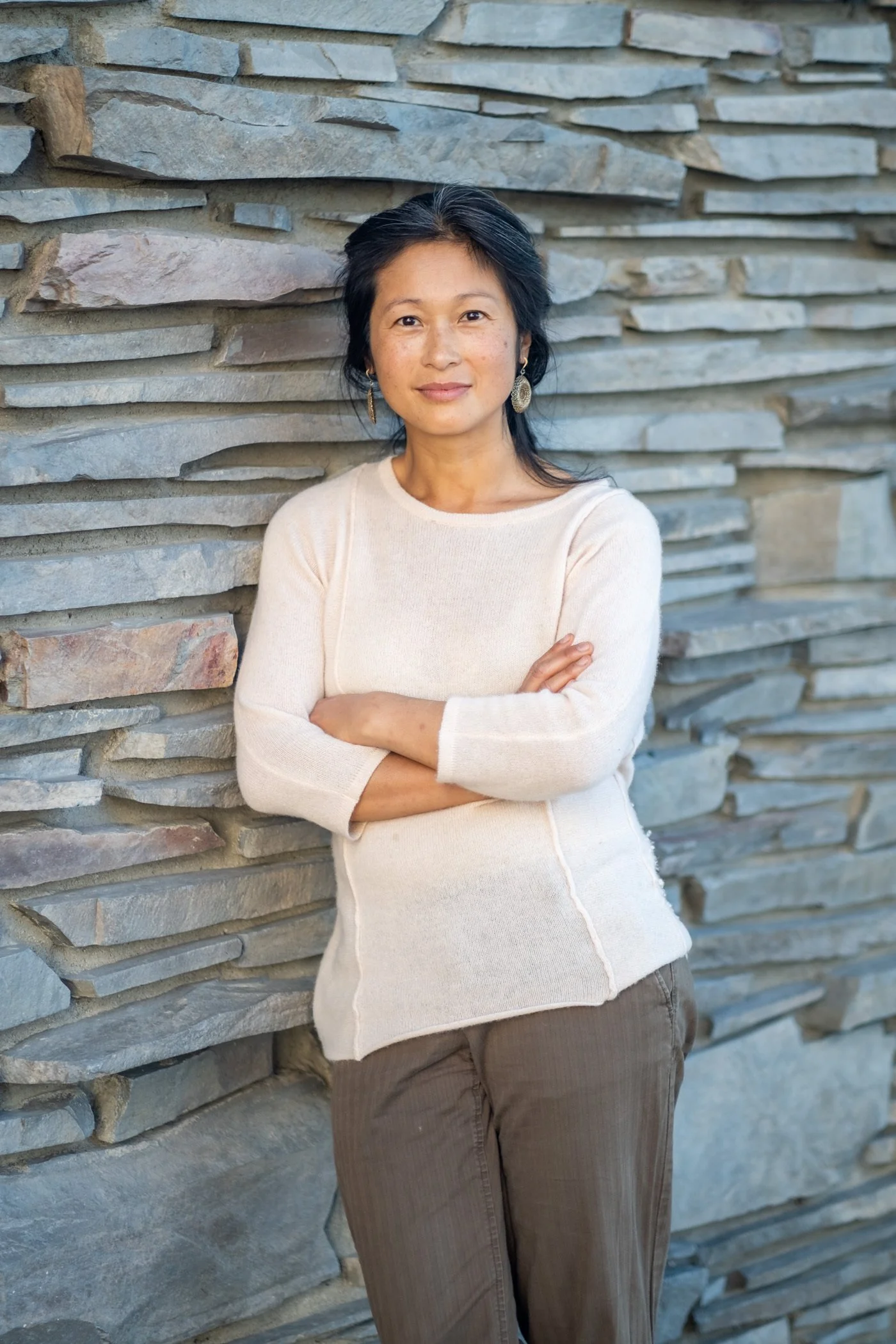
The Missing Pieces in Attachment Theory: A Decolonized Approach
with Linda Thai, LMSW, ERYT-200
An expanded conceptualization of secure attachment.
A Live 6-Class Course including 60 minutes of lecture + 30 minutes of questions, reflections and dialoguing.
9 CE Hours for Full Course APA, NYS, ASWB
Live attendance required for CE.
$240 Early Bird Price
$340 Regular Full Price
Early Bird Registration
$100 off Full CE Course* automatically applied at checkout
*early bird registration window between June 9-16, 2026.
Course Description
While Attachment Theory has offered many valuable insights, its foundations reflect certain limiting assumptions. Originally formulated based on white, Western nuclear family structures, Attachment Theory is rooted in White cis-het settler-colonizer patriarchal paradigms that hyper-emphasise dyadic relationships within a nuclear family. Yet we humans participate in relationships far beyond just our early caretakers.
Many of us feel profound connections across generations – to ancestors, spiritual traditions, and cultural lineages. We also bond deeply with the living world around us, from animals and plants to rivers and forests. And in today’s complex global society, our close relational circles extend to friends, chosen families, and communities near and far.
What Does "Good Enough" Attachment Mean in a World that Offers Pervasive Messages and Actions of Insecurity?
As mental health clinicians, our hyperfocus on perceiving client presentation solely through the lens of Attachment Theory and attachment disruptions can lead us to ignore or overlook the impact of racism, sexism, cissexism, heterosexism, ableism and classism upon our client, and mis-diagnose and inadvertently pathologize a client and their family and cultural systems.
When we experience trauma, secure attachment with a handful of early caregivers alone cannot suffice to heal our deep relational wounds. We need a more expansive vision – one that engages the full web of relationships anchoring our lives. The connections we share run far deeper than any one theory can capture.
What would it mean to reconceptualise secure attachment more holistically? How might embracing the relational richness of our multi-layered lives help transform isolation into belonging?
What You Will Learn
This training is ideal for psychologists, counselors, social workers, mental health clinicians, coaches, bodyworkers, and healing practitioners seeking a nuanced, embodied, and decolonized approach to culturally expansive care.
Course Sessions
✻ Class 1
June 25, 2026
9:00AM PDT - 10:30AM PDT
-
Expand the Concept of Secure Attachment Beyond the Nuclear Family. Examine how secure attachment is cultivated not only through early caregivers but also through chosen families, friendships, communities, school, the media, the systems and structures of society and government, and global relational networks.
Recognize the Influence of Structural Oppression on Attachment Experiences and Identity Formation. Identify how systems of racism, sexism, cissexism, heterosexism, ableism, and classism shape our internal working models of ourselves and the world around us.
Acknowledge the Role of Ancestral, Cultural, and Ecological Bonds. Explore how connections to ancestors, spiritual traditions, cultural lineages, and the natural world contribute to a sense of security, belonging, dignity, and relational healing.
✻ Class 2
July 2, 2026
9:00AM PDT - 10:30AM PDT
-
Explore the historical impact of colonization upon our relationship to the land.
Explore how colonization disrupted Indigenous land stewardship, replacing reciprocal relationships with exploitative and extractivistic systems and policies that prioritize profit over sustainability. Examine how this history continues to shape our personal connections and contemporary relationship to land, influencing our sense of belonging, identity, and access to natural spaces, often disconnecting us from traditional ecological knowledge and practices.
Rest: A writing practice to land in this land.
ReWilding the Soma: Cultivate embodied awareness of an expansive kinship network via somatic practices.
ReMembering: Express personal and ancestral relationships with nature through a guided imagery exploration, with an open invitation for expression via writing, drawing, movement, song, or story.
Restore reciprocity and stewardship with the natural world.
✻ Class 3
July 9, 2026
9:00AM PDT - 10:30AM PDT
-
Identify the impact of mass historical trauma and colonization upon our ancestors (human and non-human) and upon our rituals for remembering.
Examine how mass historical trauma and colonization disrupted ancestral traditions, severing cultural continuity and eroding rituals for honoring and remembering those who came before us. Consider how this disconnection has impacted our ability to engage in collective mourning, storytelling, and ceremonial practices that once sustained intergenerational healing and resilience.
Rest: A writing practice to land in the lineage of your ancestor.
ReWilding the Soma: A didactic and somatic exploration of an expanded conceptualization of ancestry, followed by a writing practice.
ReMembering with Ritual: A didactic and storytelling approach to unpacking ancestral grief, with an open invitation for expression via writing, drawing, movement, song, or story.
Restore reciprocity and stewardship with those who have come before and those who have yet to come.
✻ Class 4
July 16, 2026
9:00AM PDT - 10:30AM PDT
-
Explore how colonialism, imperialism, and modernity have suppressed, appropriated, or commodified cultural traditions, often distancing individuals and communities from their ancestral practices. Examine how these forces have reshaped our relationship to culture, influencing which rituals and traditions are preserved, adapted, or lost, and how this affects our sense of identity and belonging.
Rest: A writing practice to name all the complicated emotions that surface around the fraughtness of reclaiming cultural heritage.
ReWilding the Soma: A didactic, sensorial and somatic exploration of culture, followed by a writing practice.
ReMembering: A visual storytelling approach to reclaiming culture, with an open invitation for expression via writing, drawing, movement, song, or story.
Restore balance.
✻ Class 5
July 23, 2026
9:00AM PDT - 10:30AM PDT
-
Explore how colonialism, imperialism, and modernity have imposed rigid ideals of productivity and control over the body, shaping our relationship to rest, play, pleasure, and work through systems that prioritize efficiency over well-being. Consider how these forces, along with fatphobia and ableism rooted in colonial ideologies, have contributed to body shame, the moralization of health, and the devaluation of diverse body types, further disconnecting us from intuitive movement, sensual experience, rest, and joy.
Rest: A didactic and storytelling approach to examining our relationship to rest.
ReWilding the Soma: A didactic and storytelling approach to exploring the historical, structural, institutional contributors to disinhibiting our aliveness as a survival imperative, with invitation for expression via writing, drawing, movement, song, or story.
ReMembering: Our birthright to artistic expression, embodied emotional expression, and pleasure, play, rest, joy and rage.
Restore dignity.
✻ Class 6
July 30, 2026
9:00AM PDT - 10:30AM PDT
-
Examine how colonialism, imperialism, and modernity have imposed linear, clock-driven concepts of time that prioritize productivity and economic efficiency over cyclical, relational, and ancestral ways of experiencing time. Consider how this shift has disrupted our connection to natural rhythms, seasons, and ceremonial time, often creating a sense of urgency, disconnection, and burnout in our daily lives.
Rest: A didactic and storytelling approach to cosmology.
ReWilding the Soma: Provocations and invitations to imagine, to dream, to embody, to create.
ReMembering: The wisdom of our Elders.
Restore perspective.

Each class includes:
A recording of the live class (if you aren’t able to attend live).
A recording of the Q&A (if you aren’t able to attend live).
Linda’s powerpoints – for those of us who are visual learners - include a comprehensive resource and reference list.
Relevant and up-to-date supplemental materials that may include: videos for you to practice somatic techniques, research articles, resource lists for specific areas of curiosity.
In the spirit of addressing historic and systemic barriers to participation, there are several equity pricing scholarship spaces available for this training. Priority of access for BIPOC and LGBTQ+ individuals, individuals living with disabilities, and individuals living with lower income.
Please contact: hello@mindful.courses with your request.
Meet the Instructor
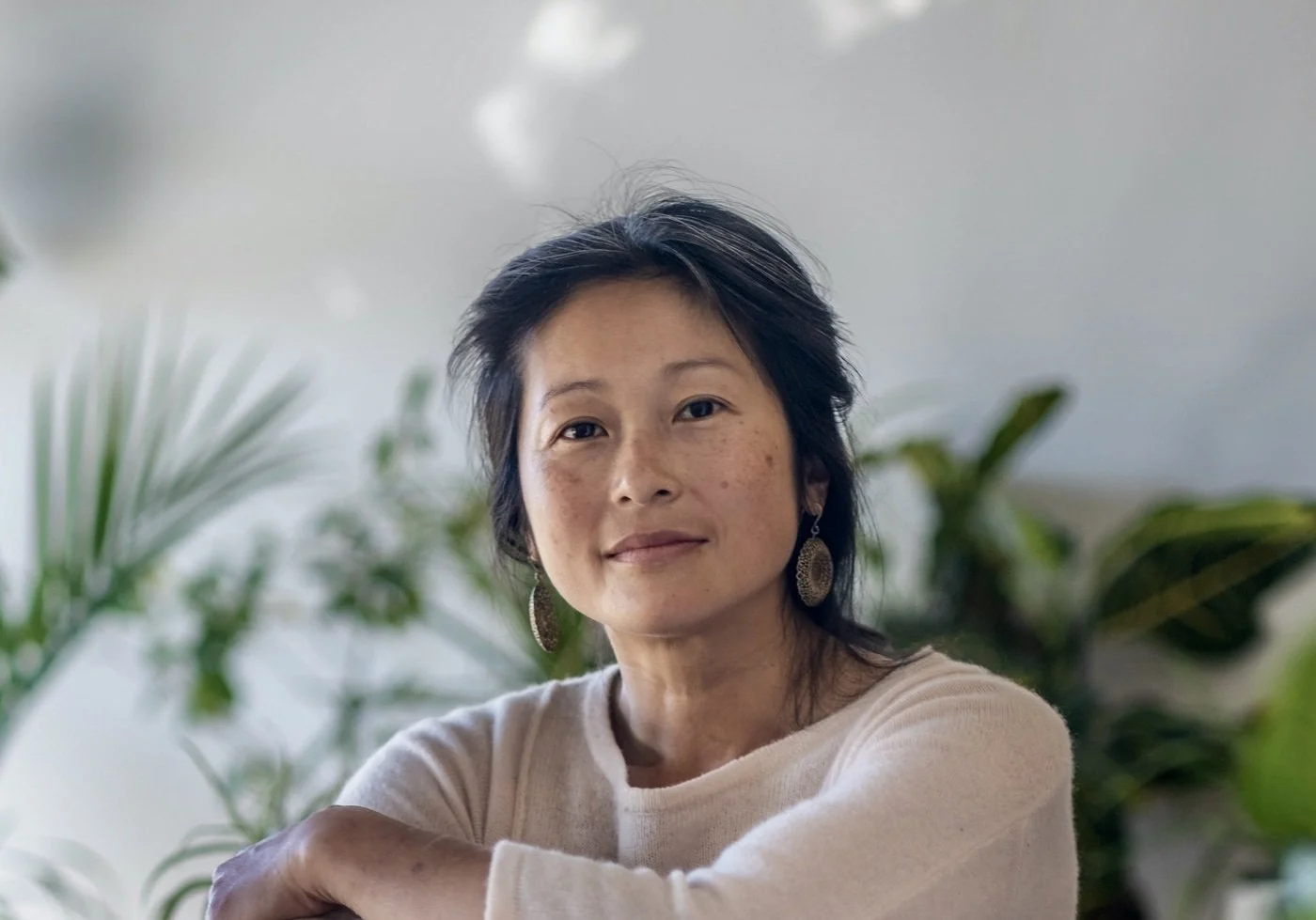
Linda Thai, LMSW ERYT-200 is a trauma therapist and educator who specializes in brain and body-based modalities for addressing complex developmental trauma. Linda has worked with thousands of people from all over the world to promote mindfulness, recover from trauma, and tend to grief as a means of self care. Linda’s work centers on healing with a special focus on the experiences of adult children of refugees and immigrants. Her teaching is infused with empathy, storytelling, humor, research, practical tools, applied knowledge, and experiential wisdom.
She has assisted internationally renowned psychiatrist and trauma expert, Dr. Bessel van der Kolk, with his private small group psychotherapy workshops aimed at healing attachment trauma. She has a Master of Social Work with an emphasis on the neurobiology of attachment and trauma.
Linda has studied Sensorimotor Psychotherapy, Somatic Experiencing, Brainspotting, Internal Family Systems, Trauma-Informed Stabilization Treatment, Havening Touch, Flash Technique, and structural dissociation of the personality, and offers the Safe and Sound Protocol, yoga, and meditation within her practice. Linda works on the traditional lands of the Tanana Athabascan people (Fairbanks, Alaska) with those recovering from addiction, trauma, and mental illness. She is passionate about breaking the cycle of historical and intergenerational trauma at the individual and community levels.
For more information about Linda and her various offerings go to www.linda-thai.com or follow her on IG @lindakthai.
Frequently Asked Questions
-
This training is ideal for psychologists, counselors, social workers, mental health clinicians, coaches, bodyworkers, and healing practitioners seeking a nuanced, embodied, and decolonized approach to culturally expansive care.
-
No prior training is needed.
-
This course is a live course and meets at 9:00AM PDT - 10:30AM PDT (Pacific Daylight Time).
Recordings of the course will be made available after each live session however, please note that rewatching recordings does not make you eligible for CE credits. To obtain CE credits you must attend live classes.
Each live class includes 60 minutes of lecture + 30 minutes of questions, reflections and dialoguing.
This course will also be available as an on-demand product later this year. -
Yes, you will have continued access to the course materials and recordings are available for 365 days after the last class.
-
Yes. This course offers 9 CE Hours (APA, NYS, and ASWB) for participants who attend all six classes live.
Please note that live attendance is required to earn CE credits. Recordings and replays are available for learning purposes but do not qualify for CE credit.
-
Refund Policy for Live Courses
Mindful Courses allows refunds within 14 days of purchase for Live Courses. Refund requests must be submitted prior to the course start date. Refunds are not permitted after 14 days of purchase or after course completion or CEs are claimed. To initiate a refund, please reach out to hello@mindful.courses with your order confirmation email and details.